
Posts

🐦 How Hummingbirds Hover: The Motion Inside Apparent Stillness

Image
A hummingbird at a flower can look almost motionless. Its head remains aligned with the bloom, its body hangs at one point in the air, and only the blur beside it reveals the effort being made. The apparent pause is not a pause at all. It is a rapidly renewed balance between lift, weight, motion, and control. Most birds move forward through the air while their wings provide lift and thrust. A hummingbird can do something more demanding: remain suspended without relying on forward speed. To hover, it must push air in a way that supports its body through nearly every part of the wing cycle. The Still Body and the Moving Air A hovering hummingbird continually corrects its position. Tiny shifts in wing angle, stroke width, tail position, and body orientation keep the bird from drifting away from the flower. These adjustments happen so quickly that the body can appear calm even while the flight muscles ...

🌿 Why Henna Stains Fingertips More Deeply Than Other Skin

Image
When dried henna paste is removed, the color beneath it can look almost modest: a clear orange tracing the fingertips and palm. By the following day, the same marks may have deepened toward reddish-brown. The change is especially striking on the parts of the hand that touch, grip, and press against the world most often. That uneven depth is not accidental. Henna does not color every part of the body equally because skin itself is not built the same way everywhere. The darkest results tend to appear where the outermost layer is thick, keratin-rich, and able to hold more pigment. The stain does not simply sit on the skin Henna leaves contain lawsone, an orange-red pigment that becomes available when the leaves are crushed or ground and prepared as a paste. Henna therefore belongs to the wider history of natural dyes , but its behavior on the body depends on the particular material it meets. The visible...

💡 How an Incandescent Filament Turns Resistance into Warm Light

Image
An incandescent bulb seems to awaken all at once. The switch closes, the filament brightens, and a room takes on a warm amber cast. Inside the glass, however, the change is not sudden magic. It is a rapid physical sequence in which electrical current meets a deliberately narrow path, the metal grows intensely hot, and part of that heat becomes visible to the eye. A current meets a narrow metal path The central event happens in the tungsten filament. Current enters through the bulb’s contacts and moves along a wire far thinner than the conductors that carry electricity through the rest of the circuit. Tungsten does not allow charge to move without resistance. Interactions within the metal impede the current and transfer electrical energy into the filament’s atomic lattice, increasing its thermal motion. That process is often described simply as resistance heating, but the scale matters. The filament is ...

🌫️ Why the Great Smoky Mountains Fade into Blue Haze

Image
At dawn, the Great Smoky Mountains can appear less like a wall of peaks than a sequence of blue shadows. Ridge after ridge fades into the distance, while the valleys seem to hold smoke even when no fire is burning. The effect is one of the region's defining sights, but the name “Smoky” begins with a quiet interaction among trees, moisture, airborne particles, and sunlight. The forest helps make the haze A forest is not chemically silent. Leaves release volatile organic compounds as part of normal plant activity. Once these compounds enter the air, some react with oxygen and other atmospheric chemicals, contributing to extremely small organic particles that remain suspended as aerosols. Above broad forested slopes, these particles become part of the atmosphere through which distant ridges are seen. The result is different from a column of smoke. There may be no burning source and no single plume. Inste...

🧪 Animal Chemical Encounters: When Molecules Shape Behavior

Image
In the sea, a chemical encounter can begin before a chase, a bite, or a sound. A molecule released from skin, mucus, food, or water can change what an animal notices, how it moves, and whether it keeps investigating. To human eyes, the moment may look like simple curiosity. To the animal, it may be part of a sensory world where chemistry is as immediate as light or touch. That difference matters when thinking about dolphins and pufferfish. Young bottlenose dolphins have been observed approaching pufferfish with unusual gentleness, nudging them, holding them briefly, and sometimes passing them among one another. The pufferfish inflates as a defense, which makes it a responsive object in the water. For an intelligent, social animal that often explores floating objects, that alone may be enough to explain much of the interest. The more difficult question is whether chemistry also plays a role. Pufferfish are assoc...

🌊 Niagara Falls Facts: How Water Turns Stone Into Time

Image
When Niagara Falls first appears through its mist, it can feel like a single spectacular drop. But the falls are better understood as a place where a much larger water system briefly becomes visible. The water is not arriving from nowhere. It belongs to a long drainage path that gathers through the upper Great Lakes, moves toward Lake Erie, and then passes through the Niagara River on its way to Lake Ontario and the St. Lawrence River. A river carrying stored water The Great Lakes system gives Niagara its hidden scale. These inland seas do not behave like a small stream responding only to the latest rainfall. They hold water across a vast basin shaped by ice, elevation, outlet channels, and time. By the time water reaches the Niagara River, it carries an inheritance left by retreating glaciers and by the slope between Lake Erie and Lake Ontario. That glacial inheritance matters. Around the ...

🌘 Eclipses Across the Solar System: When Shadows Travel

Image
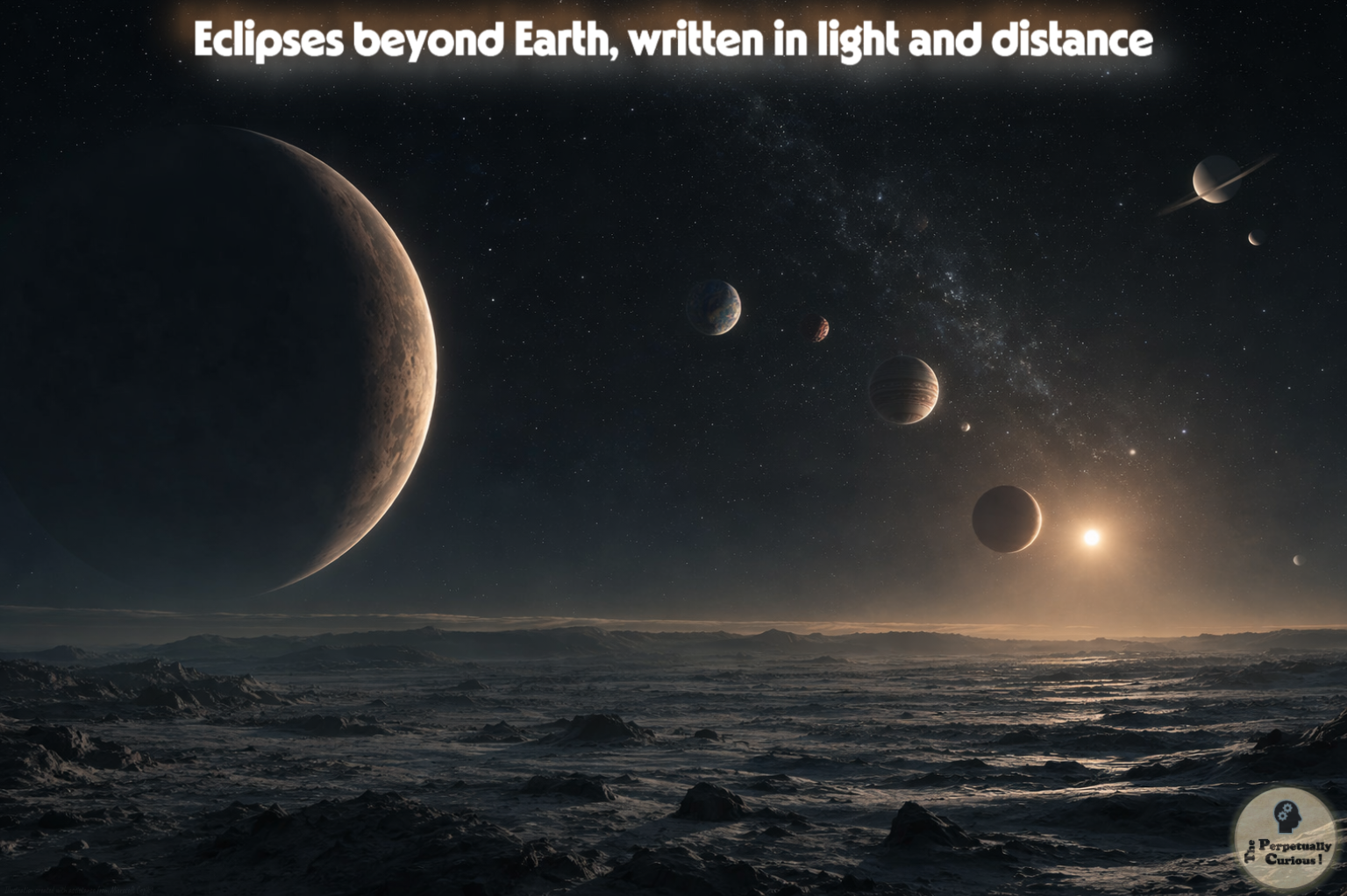
An eclipse can feel like a rare celestial exception, but the underlying arrangement is simple. A light source shines, one world blocks that light, and another surface receives the shadow. On Earth, the Sun, Moon, and our planet create the examples we know best. Across the Solar System, the same geometry repeats with different planets, moons, rings, distances, and atmospheres. A simple alignment, many possible shadows The basic distinction depends on which body receives the shadow. In a solar eclipse, a moon passes between its planet and the Sun. In a lunar eclipse, a moon moves into the shadow of its planet. Both depend on alignment, but the visual result depends on scale. A large nearby moon may hide the Sun completely. A small or distant moon may appear only as a dark dot crossing the solar disk. A planet with a deep shadow can darken its moons for hours, while a thin penumbral crossing may barely dim the surface. The s...

🌌 Constellations: How Star Patterns Help Us Find Our Way

Image
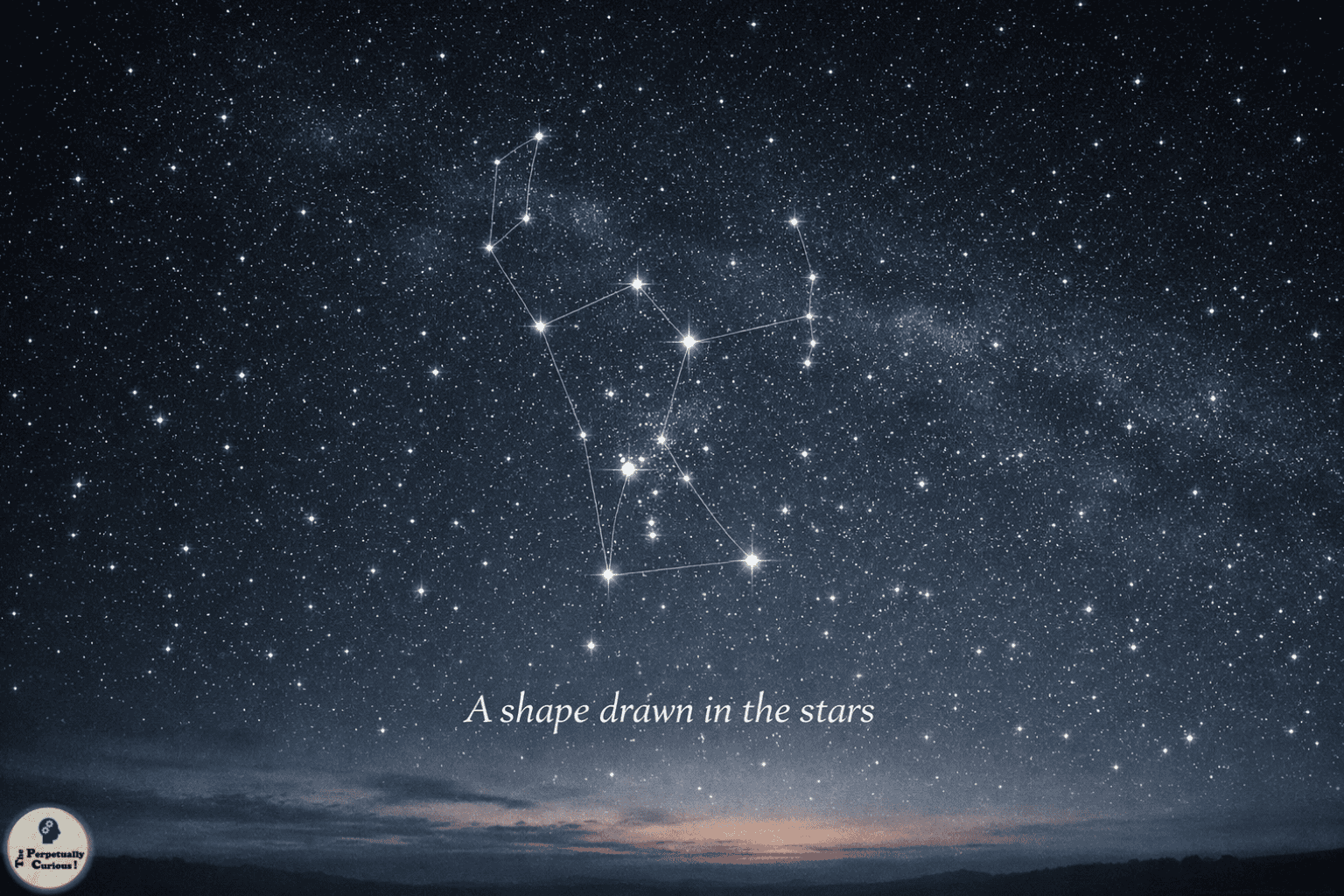
At first glance, constellations look like drawings placed gently across the night. A hunter, a cross, a scorpion, a bear, or a bright line of stars can seem almost intentional, as though the sky itself has arranged symbols for us to find. Yet their usefulness begins with a simpler human act: the mind remembers patterns. When scattered stars become a map A constellation is not usually a real cluster of neighboring stars. Many of the stars that seem close together from Earth are separated by enormous distances. They share a direction in our sky rather than a common home in space. Modern astronomy goes even further, treating official constellations as defined regions of the celestial sphere, not just picture-like outlines. That distinction makes constellations more interesting, not less. A pattern does not need to be physically connected to be useful. A map does not become meaningless because the roads, rivers, and ...

🌙 White Half Moon on Nails: The Quiet Growth Zone Beneath

Image
At the base of some fingernails, a pale crescent appears like a small moon partly tucked under the skin. It may be broad and clear on the thumb, faint on another finger, or almost absent from view. That uneven visibility can make the white half moon on nails feel mysterious, as if it were a private code written into the body. The name for this crescent is the lunula. Its meaning begins not with symbolism, but with nail anatomy. The lunula is not a loose mark, stain, or separate object under the nail. It is the visible part of the nail matrix, the living region that produces new nail cells. The crescent begins in the matrix A fingernail is built from several related structures. The hard surface that we trim is the nail plate. The pink tissue beneath most of it is the nail bed. At the base, partly hidden under the proximal nail fold, sits the nail matrix. This is the active growth zone where cells divide, fill with ...