


🌅 Pandiculation: How the Waking Stretch Restores Body Awareness
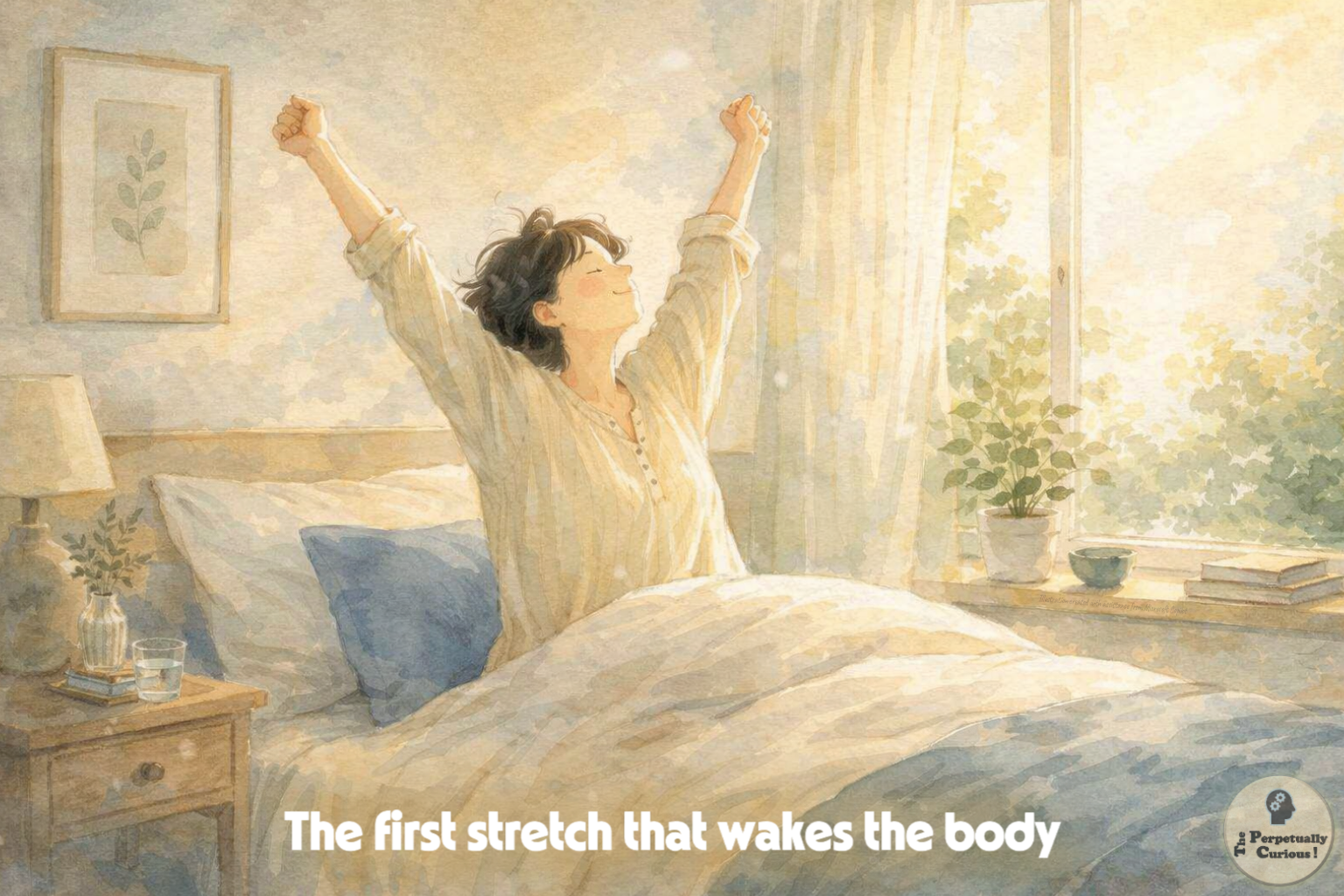
Before the eyes fully focus or the mind has assembled the day, the body may begin moving on its own. The arms rise, the chest opens, the back lengthens, and several muscles tighten before easing into release. This familiar sequence has a scientific name: pandiculation.
Pandiculation is not simply a voluntary stretch performed by habit. It is an instinctive, coordinated reflex that often appears when the body moves from rest toward activity. It can occur after sleep, after sitting for a long time, or after another period of reduced movement. Its value lies not only in lengthening muscles, but also in restoring the flow of sensory information that tells the nervous system where the body is and how it is prepared to move.
When stillness quiets the body’s map
Even during sleep, the nervous system continues working. Yet movement is reduced, muscle tone changes, and the body may remain in similar positions for long intervals. Sensory signals from muscles, tendons, and joints continue, but the transition out of stillness creates a moment when stronger feedback becomes useful.
That feedback supports proprioception, the body’s internal sense of position and movement. Specialized receptors respond when a muscle changes length, when a tendon carries tension, or when a joint changes angle. Their signals travel toward the spinal cord and brain, contributing to an internal map that guides balance, posture, and voluntary motion.
The map has not disappeared during rest. Instead, waking movement gives it a vivid new set of coordinates. A full-body stretch activates many regions at once, producing a concentrated wave of information as the limbs lengthen, the torso expands, and tension rises and falls.
A movement that sends information inward
The order of pandiculation matters. It commonly includes a gradual increase in muscular tension, a lengthening phase, and a release. This sequence distinguishes it from casually pulling one limb into a fixed stretch. Multiple muscle groups participate together, while breathing often deepens and the chest opens.
As the movement unfolds, receptors throughout the body report changing length and tension. The nervous system receives these signals as an integrated event rather than as isolated messages from one arm or one leg. This may help explain why the waking stretch feels less like exercising a specific muscle and more like the whole body returning to itself.
The pleasant quality of the movement may involve renewed sensory input, changing circulation, and broader shifts in arousal, although the exact basis of that sensation is still being studied. It is therefore more accurate to describe pandiculation as a sensory and motor transition than as a simple attempt to “work out” stiffness.
The larger main-site treatment carries the reflex into circadian timing, early development, animal behavior, and cultural language; those surrounding layers reveal how widely this small gesture is woven through biology and experience.
Why the reflex belongs to transitions
Pandiculation appears most naturally at boundaries: sleep becoming wakefulness, sitting becoming standing, or stillness becoming motion. During waking, the body is also undergoing broader changes in alertness, hormone patterns, autonomic activity, and muscle tone. The precise trigger for pandiculation is not fully settled, but its timing places it within this coordinated rise toward readiness.
A yawn often arrives beside the stretch, especially around sleep and waking, yet the two do not have to occur together. The physiology of yawning follows its own layered pathways, even though both reflexes can mark changes in arousal and engage coordinated movements across the body.
The waking stretch is therefore not merely an ornament of morning. It is a compact conversation between muscles, sensory receptors, the spinal cord, and the brain. In a few unplanned seconds, the body gathers information, restores tone, and prepares for deliberate movement.
Stillness ends quietly. Before the first purposeful step, pandiculation helps the body recognize itself as ready to move again.
Comments
Post a Comment