

🐾 Wolves, Foxes, and Jackals: One Family, Many Survival Paths
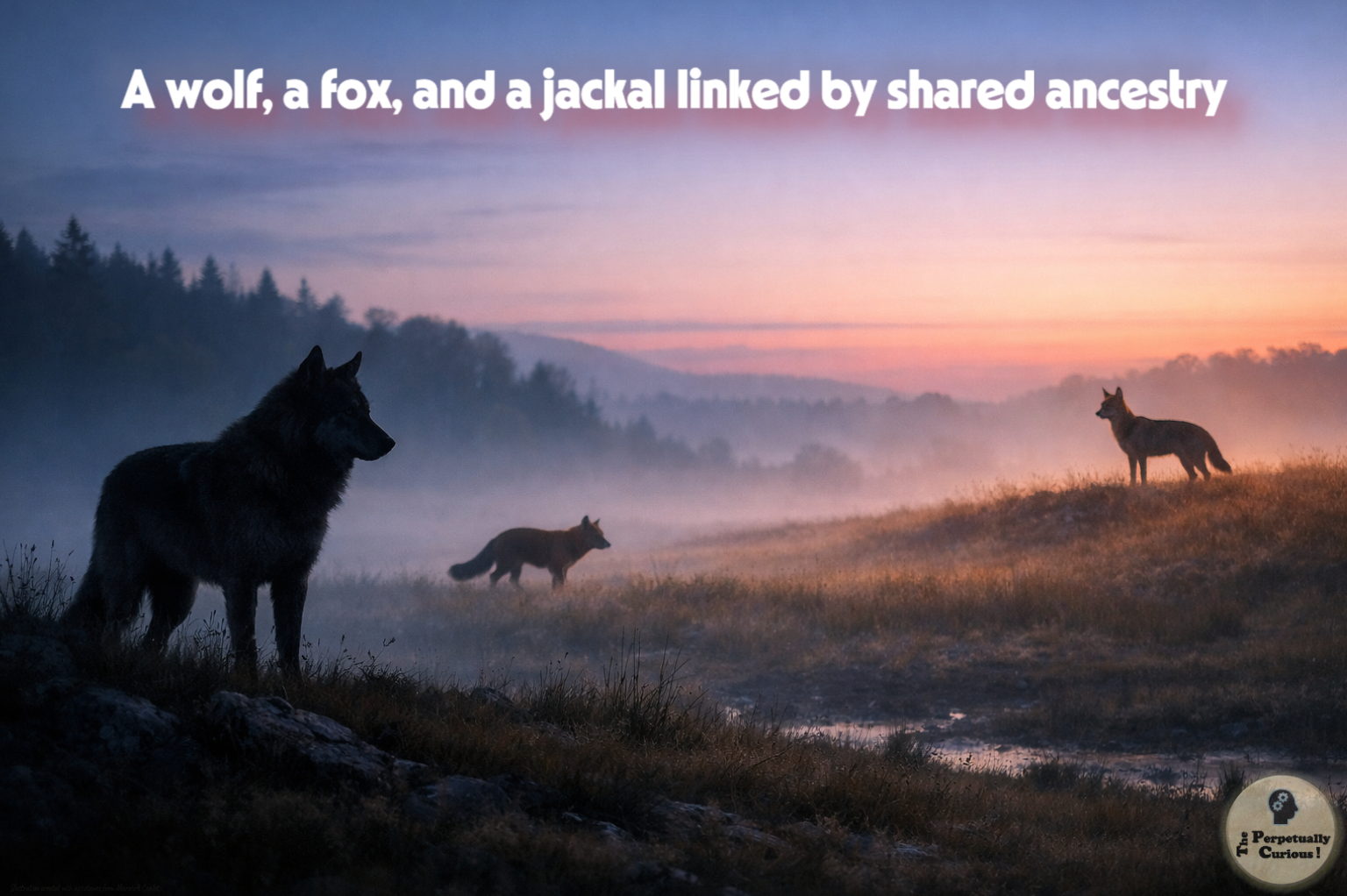
Place a wolf, a fox, and a jackal in the same imagined landscape and the differences appear first. One seems built for distance and group movement. One carries the quick precision of a small hunter at the edge of cover. One belongs to a world of open scrub, watchful pauses, and flexible opportunity. Yet all three carry the same deeper signature. They are canids, members of the dog family, shaped by a shared inheritance that did not produce sameness, but possibility.
A family blueprint, not a single lifestyle
The dog family is best understood as a flexible blueprint. Long muzzles, mobile ears, efficient legs, bushy tails, scent rich noses, and adaptable teeth form a toolkit that can be stretched toward many ways of living. In one setting, that toolkit favors endurance. In another, it favors listening, leaping, and solitary movement. In another, it favors alert scavenging, pair bonds, and quick decisions around larger predators.
That is why wolves, foxes, and jackals feel both familiar and separate. A wolf expresses the canid pattern through size, stamina, and social coordination. A fox expresses it through agility, stealth, and fine attention to small prey. A jackal expresses it through flexibility, mixed feeding, and a life tuned to shifting chances. None of these paths is the original or final version of the family. Each is one ecological answer written from the same ancestral grammar.
The shared design also explains why quick labels can mislead. "Dog family" can sound simple, as if every member should live like a domestic dog or hunt like a wolf. In reality, the family is a set of variations on movement, smell, feeding, communication, and place. The resemblance is real, but it is never the whole story.
Scent, motion, and the logic of place
For many canids, the world is not first understood through sight alone. It arrives through scent traces, faint sounds, tracks, wind direction, and the quiet messages left by other animals. A canid nose can turn a patch of ground into a layered record of movement, territory, food, danger, and time. This places the dog family within a wider world of animal sensing, where chemical worlds shape how creatures meet their surroundings before anything dramatic is visible.
Movement carries the same pattern of shared design and local adaptation. Open country can reward long legs, endurance, and cooperation. Broken cover can reward a lighter body, fast turns, and careful listening. Savanna and scrub can reward opportunism, patience, and the ability to shift between hunting and scavenging. Even beyond wolves, the cooperative endurance seen in African wild dogs shows how one family design can become a demanding social strategy across wide terrain.
The larger version on our main site keeps the wider landscape intact, following wolves, foxes, and jackals through their separate ecological paths without reducing them to one simple comparison.
Kinship without sameness
The useful lesson is not that wolves, foxes, and jackals are almost the same. They are not. Their body sizes, social lives, diets, calls, habitats, and relationships with other predators can differ sharply. The useful lesson is that evolution often works by modifying a shared starting point. A family pattern can remain recognizable while each branch moves toward its own solution.
This is why the dog family holds such quiet fascination. A wolf crossing snow, a fox pausing beside grass, and a jackal listening in warm dusk do not merely represent three animals. They show how ancestry can travel into different landscapes and still leave traces of kinship behind. The narrow story resolves there: shared roots do not erase difference. They make difference more meaningful.
Comments
Post a Comment