🌧️ Petrichor: How First Rain Lifts Earth’s Hidden Scent
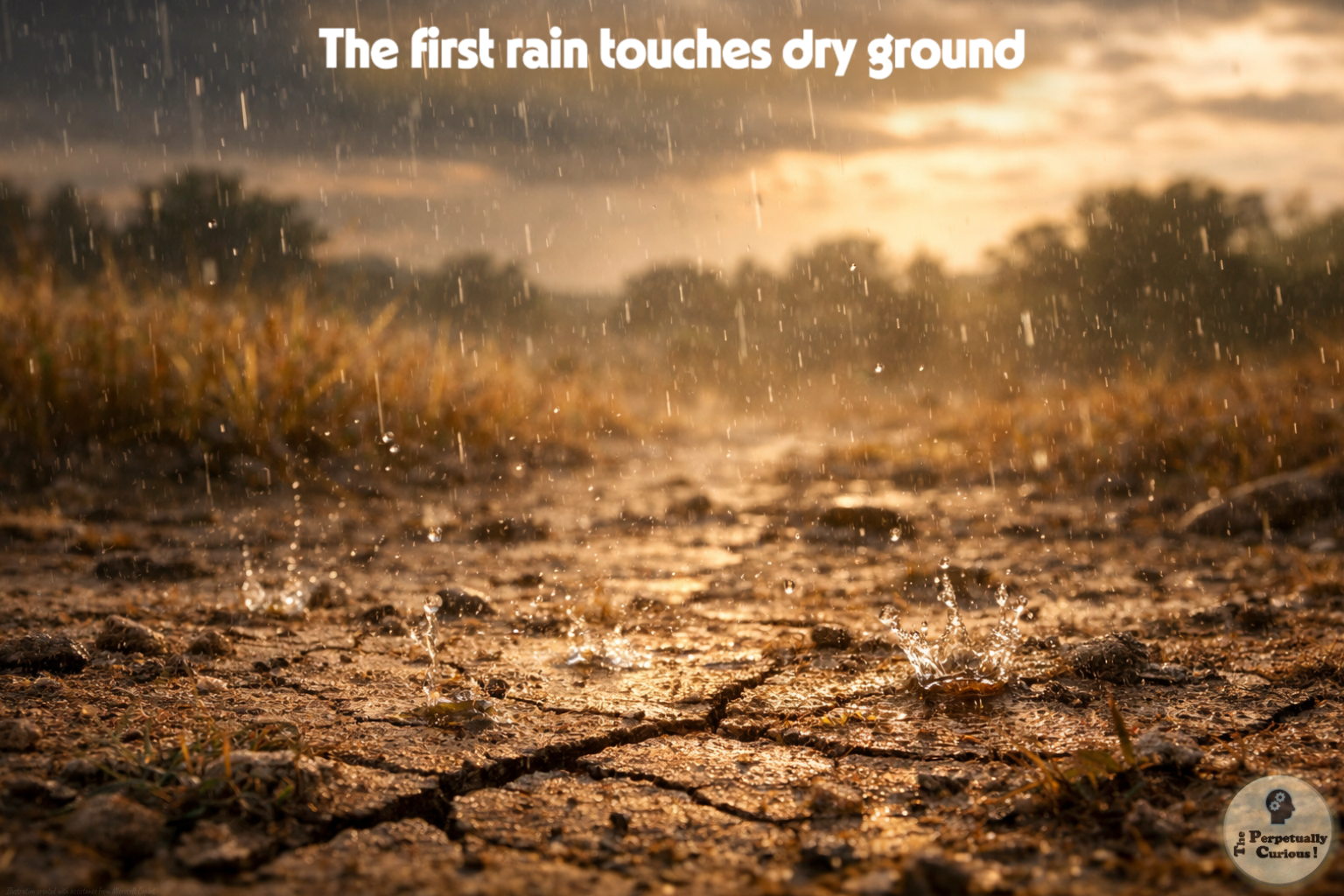
The smell of rain often arrives before we think about its science. A dry path darkens, a garden bed drinks in the first drops, and a scent rises that seems older than the moment itself. It can feel as if rain has a fragrance of its own, but the water is only part of the story.
What many people call the smell of rain is usually petrichor, the earthy aroma released when rain meets dry ground. The scent comes from materials already waiting on soil, stone, leaves, pavement, and dust. During dry periods, plant related oils and other volatile compounds can gather on surfaces. Soil microbes also contribute compounds with earthy notes, especially geosmin, which many noses can notice at extremely low concentrations.
Rain does not simply wet these materials. It disturbs them.
When raindrops become tiny scent lifters
A raindrop hitting dry, porous ground is a small impact event. The drop spreads, meets rough surfaces, and may trap tiny pockets of air. As those pockets rise through the droplet and burst, they can release fine aerosol particles into the air. These particles carry scent compounds upward, where breeze, warmth, and human breath complete the journey.
That is why the first smell of rain is not only a chemical event. It is also a physical release. Soil and stone may hold the ingredients, but the raindrop provides the motion that lifts them into the surrounding air.
This also helps explain why petrichor often seems strongest after heat and dryness. Dry weather gives certain compounds time to collect. Warm ground can make volatile molecules easier to release. When rain finally arrives, the first impacts may lift a concentrated signal from the surface. A long-awaited sprinkle can sometimes smell stronger than a heavy downpour because light to moderate rain may allow bubble formation and aerosol release more effectively than sheets of water that quickly saturate the ground.
Why the scent changes from place to place
The same basic process can feel different in a forest, a farm field, a city street, or a rocky trail. Soil texture, organic matter, vegetation, mineral content, surface temperature, and recent weather all influence what the first drops release. Clay rich ground may hold certain compounds differently from sandy ground. Leaf litter can add its own organic character. Pavement and dust can layer urban notes over the earthy base.
That local variation is part of the quiet appeal. Petrichor is familiar enough to feel universal, yet specific enough to carry a place with it. In the wider Planet Earth collection, this kind of everyday observation sits beside larger patterns of weather, soil, water, and atmosphere.
The larger version on our main site keeps the wider landscape intact, including the naming of petrichor, microbial chemistry, cultural language, storm ozone, regional soils, and the question of why Earth’s rain has no true twin on other worlds.
A meeting of water, ground, and memory
The scent of rain feels powerful because it reaches more than the nose. Smell is closely tied to memory and emotion, so a brief rise of earthy air can recall childhood monsoons, garden paths, summer storms, or the relief of dry land receiving water again. The mechanism may be physical and chemical, but the experience is personal.
Petrichor begins in surfaces that wait, compounds that gather, and droplets that lift what was held close to the ground. In that small exchange, rain does not create the earth’s scent from nothing. It releases a hidden trace of the living world beneath our feet.
Comments
Post a Comment