

🐦 How Hummingbirds Hover: The Motion Inside Apparent Stillness
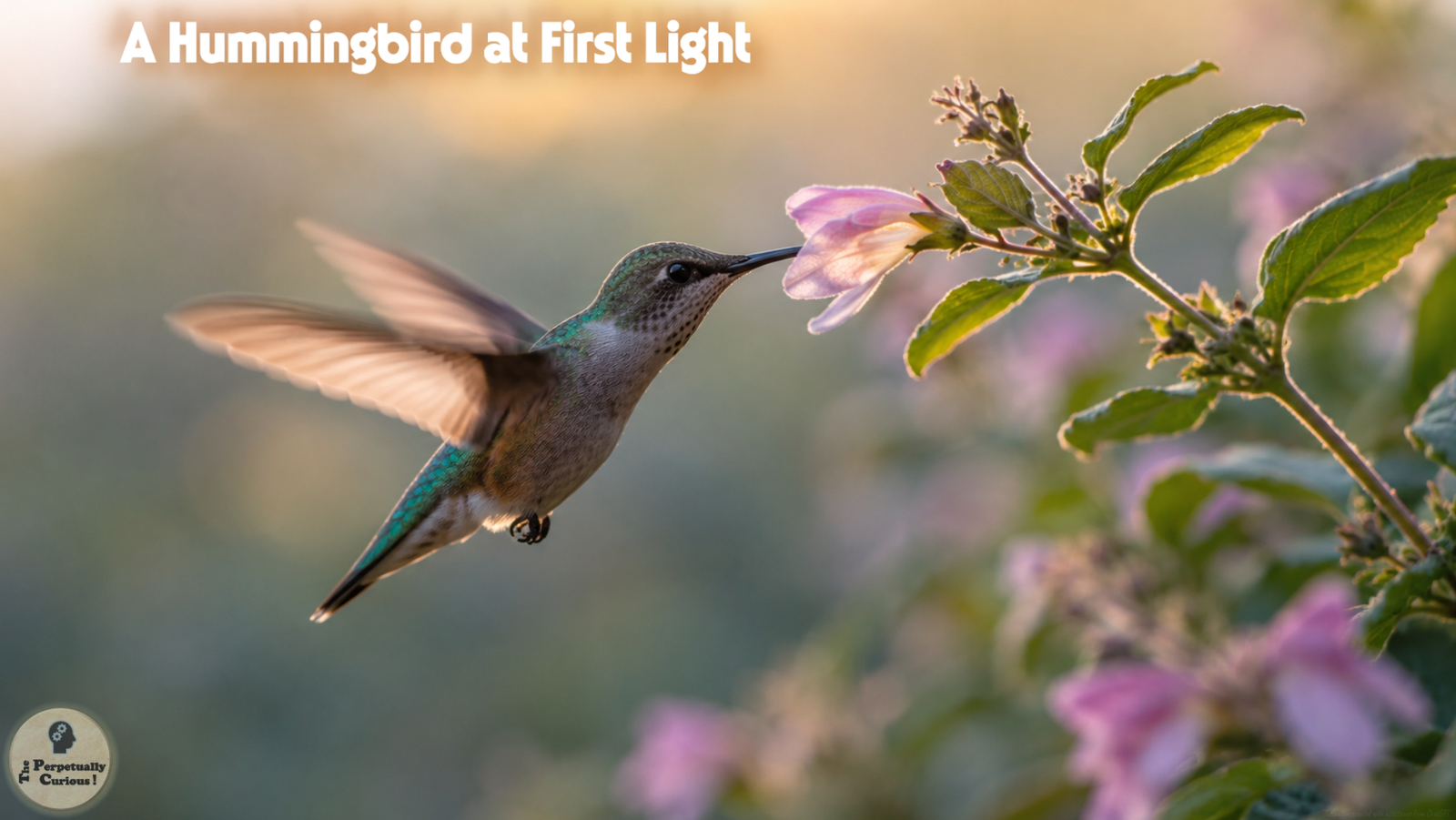
A hummingbird at a flower can look almost motionless. Its head remains aligned with the bloom, its body hangs at one point in the air, and only the blur beside it reveals the effort being made. The apparent pause is not a pause at all. It is a rapidly renewed balance between lift, weight, motion, and control.
Most birds move forward through the air while their wings provide lift and thrust. A hummingbird can do something more demanding: remain suspended without relying on forward speed. To hover, it must push air in a way that supports its body through nearly every part of the wing cycle.
The Still Body and the Moving Air
A hovering hummingbird continually corrects its position. Tiny shifts in wing angle, stroke width, tail position, and body orientation keep the bird from drifting away from the flower. These adjustments happen so quickly that the body can appear calm even while the flight muscles work intensely.
The wings sweep back and forth through a path often described as a flattened figure eight. During each reversal, the wing rotates so that its aerodynamic surface can continue redirecting air. This lets hummingbirds generate lift during both the downstroke and the upstroke, although the two strokes do not always contribute equally. The result is a nearly continuous upward force that counters gravity.
That strategy differs sharply from the flight of many larger birds. At the opposite end of avian motion, dynamic soaring allows albatrosses to draw energy from changing ocean winds and reduce the need for constant flapping. A hummingbird hovering beside a flower cannot borrow momentum in the same way. It must repeatedly create the force that holds it in place.
A Shoulder Built for Unusual Freedom
The hummingbird shoulder allows the wing to rotate through a broad range of motion. Instead of simply lifting and lowering the wing, the bird can sweep it forward, backward, and around its long axis. Strong chest muscles power these strokes, while a lightweight skeleton keeps the mass that must be supported relatively small.
Wingbeat rate varies with body size and circumstance. Smaller hummingbirds may beat their wings roughly 50 to 80 times per second, while giant hummingbirds use slower strokes. Speed alone, however, does not explain hovering. The useful motion comes from the controlled orientation of the wing, the timing of each rotation, and the bird's ability to sense and correct changes almost immediately.
The tail also contributes. It can spread, tilt, or narrow to help with stability and turning. When the bird moves from hovering into forward or backward flight, coordinated changes in the wings and tail redirect the aerodynamic forces without requiring a long transition.
Precision Has an Energy Cost
Hovering demands a high power-to-weight ratio. A hummingbird's large flight muscles, rapid circulation, efficient oxygen delivery, and fast use of sugars support the work, but the cost is substantial. The bird cannot remain in high-intensity flight indefinitely. It feeds often and perches frequently, alternating bursts of movement with moments of rest.
Nectar supplies readily available carbohydrate fuel, while insects and spiders provide protein and other nutrients. The flower is therefore more than a destination. It is part of the energy system that makes repeated hovering possible. The bird spends energy to hold its place, gains fuel from the bloom, and then carries that capacity into its next movement.
The larger main-site treatment follows the same bird beyond the hover into metabolism, torpor, migration, nesting, pollination, color, and the diversity of hummingbird life across the Americas.
What looks like stillness is therefore a precise form of motion. A hummingbird does not defeat gravity by becoming weightless. It meets gravity stroke after stroke, shaping the air so rapidly and accurately that effort becomes almost invisible.
Comments
Post a Comment