


🧪 Animal Chemical Encounters: When Molecules Shape Behavior
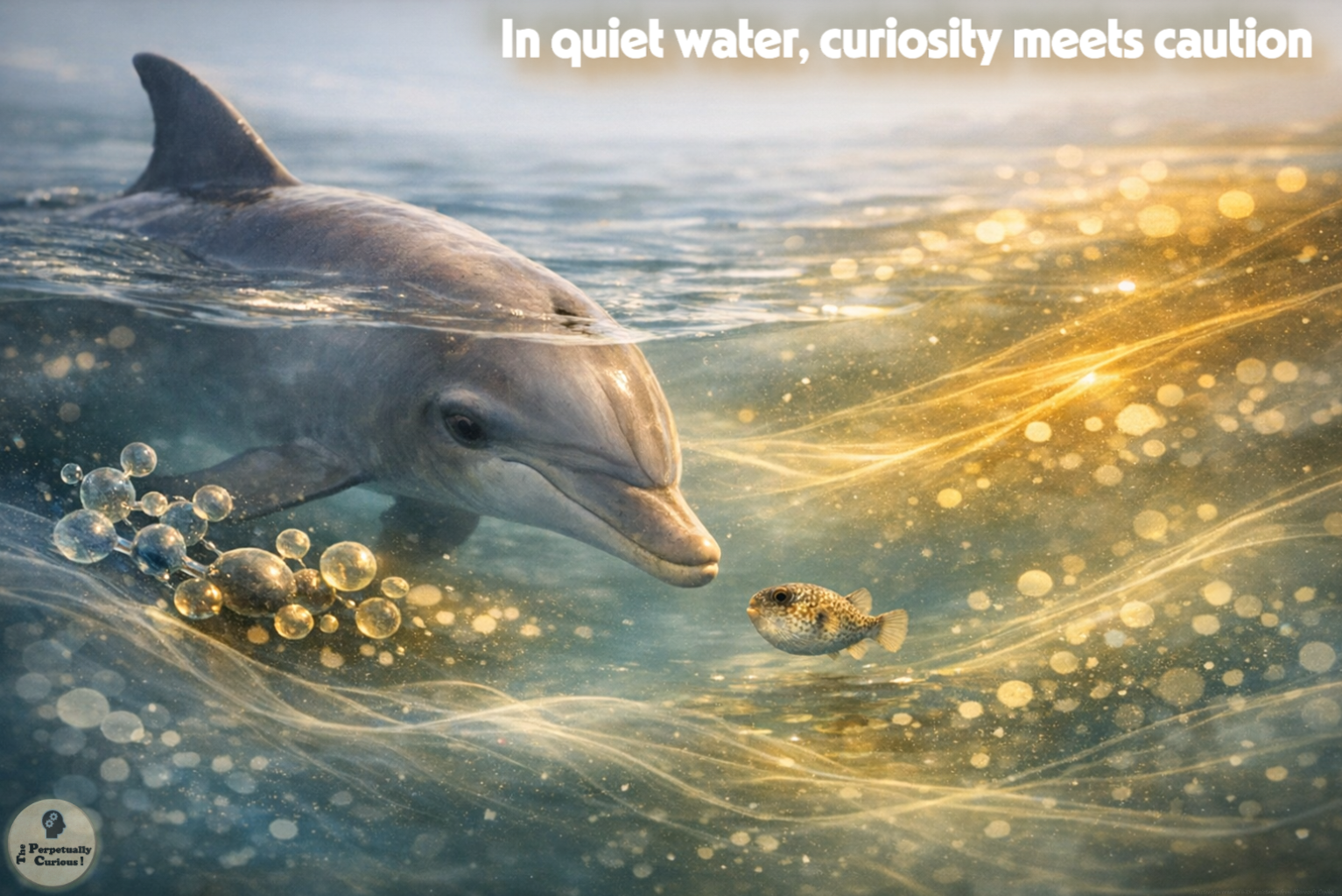
In the sea, a chemical encounter can begin before a chase, a bite, or a sound. A molecule released from skin, mucus, food, or water can change what an animal notices, how it moves, and whether it keeps investigating. To human eyes, the moment may look like simple curiosity. To the animal, it may be part of a sensory world where chemistry is as immediate as light or touch.
That difference matters when thinking about dolphins and pufferfish. Young bottlenose dolphins have been observed approaching pufferfish with unusual gentleness, nudging them, holding them briefly, and sometimes passing them among one another. The pufferfish inflates as a defense, which makes it a responsive object in the water. For an intelligent, social animal that often explores floating objects, that alone may be enough to explain much of the interest.
The more difficult question is whether chemistry also plays a role. Pufferfish are associated with tetrodotoxin, a potent neurotoxin that can interfere with nerve signaling. In high doses, it is dangerous. In trace exposure, some observers have wondered whether it might produce mild sensory effects, especially if contact occurred through the mouth. That possibility is intriguing, but it remains a hypothesis rather than a demonstrated fact.
When chemistry becomes part of behavior
Animal chemical encounters are not limited to dramatic toxins. Many species meet the world through molecules that mark food, danger, territory, readiness to breed, or the presence of another organism. Some cues drift through water. Others cling to leaves, soil, fur, feathers, or skin. A scent trail, a bitter plant compound, a fermented fruit, or a defensive toxin can all become part of the decisions animals make.
This is why the pufferfish example should be read carefully. The fish's chemical defense is real, and the dolphins' handling behavior has been observed. What remains uncertain is the inner experience behind the behavior. The animals may be responding to the fish's changing shape, to its texture, to social play, to chemical exposure, or to several factors at once. The main-site article carries the thread into tetrodotoxin, other species, and the careful limits of interpreting animal experience, while the immediate focus remains on one quieter idea: chemistry is part of the world animals sense, test, and navigate.
That principle also places the subject naturally within broader conversations about animal behavior and ecological relationships. A molecule does not have to be mysterious to matter. It may guide a predator, warn a grazer, attract a pollinator, discourage a bite, or alter how an animal approaches a familiar place.
The caution behind curious behavior
Interpreting animal behavior is delicate because observers can describe movement, timing, posture, and context, but not the animal's private sensation. A dolphin floating slowly after a pufferfish encounter may look altered to a viewer. Yet the same behavior might also follow play, social exchange, rest, or focused attention. Without direct measurement of exposure and response, the chemical explanation should remain carefully framed.
That caution does not make the story less interesting. It makes it stronger. Animal minds are not simplified versions of human minds, and animal chemical worlds are not merely background scenery. They are active sensory landscapes. In those landscapes, molecules can shape attention before a visible decision is made.
A dolphin meeting a pufferfish therefore becomes more than a strange marine anecdote. It becomes a reminder that life moves through hidden tides of signal and response. Some of those signals protect. Some attract. Some confuse. Some invite investigation. The important point is not to force a human story onto the animal, but to notice how much of the living world is carried through chemistry before it reaches the surface.
Comments
Post a Comment