

🌍 Why Mud Is Brown or Black: What Wet Soil Reveals
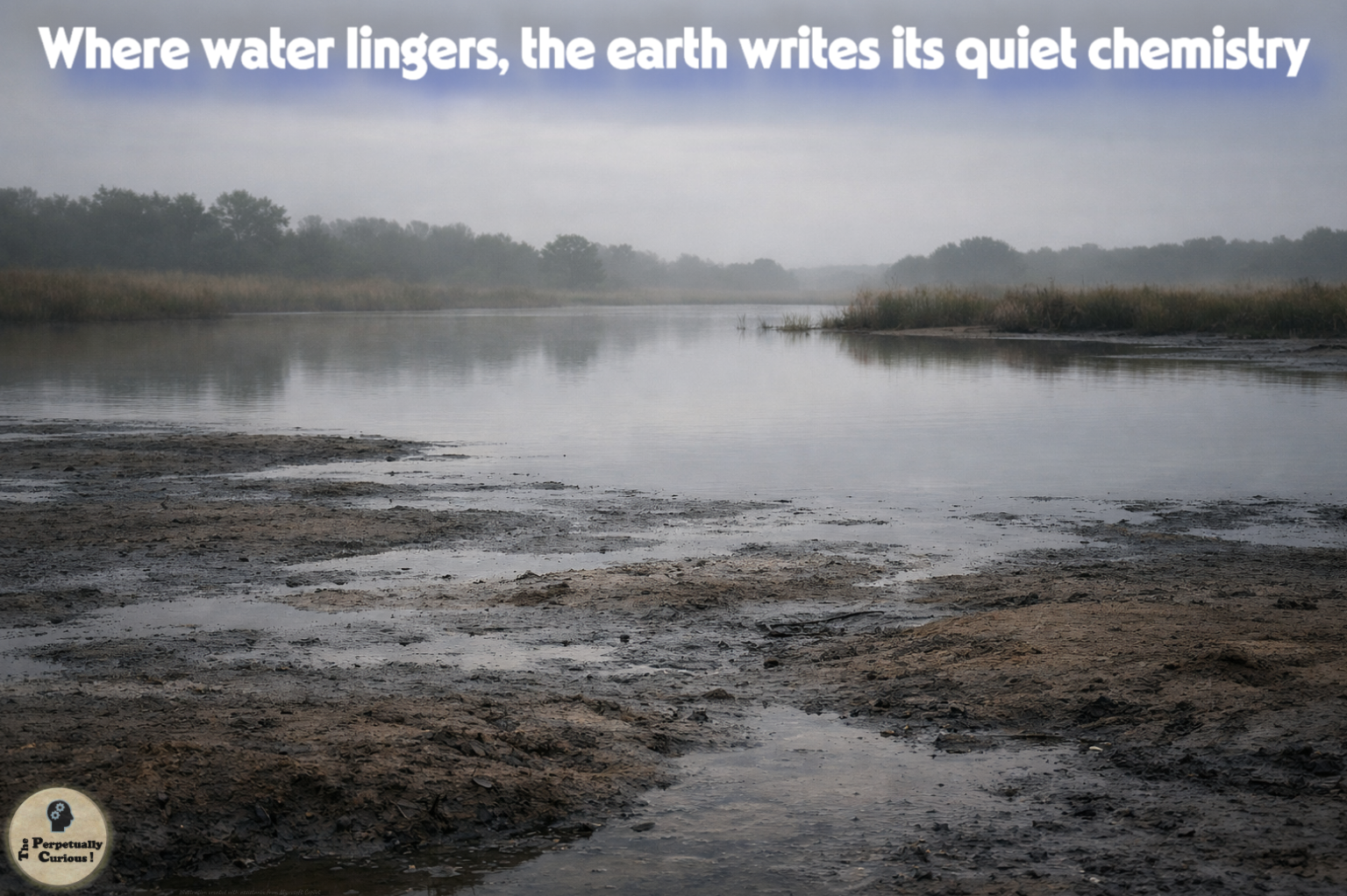
A wet patch of ground can look ordinary until its color begins to speak. Brown mud on a path, gray mud beside a pond, and black mud in a marsh are not simply different degrees of dirtiness. They are visible clues to how water has entered the soil, how much oxygen remains, and which minerals and organic materials are present. Mud color is one of those small outdoor details that turns a familiar surface into a record of conditions below.
The first layer is simple: mud begins when soil holds more water than it can drain. Water fills the spaces between particles, slows the movement of oxygen, and changes how minerals respond. Iron is especially important because it can color sediment red, yellow, brown, gray, or black depending on its chemical state. Organic matter also darkens the mixture as leaves, roots, algae, and microscopic life break down into darker carbon-rich material.
The same ground may also look different from one day to the next. Wet surfaces often appear darker because water changes how light reflects from mineral grains and organic coatings. That visible deepening is separate from the slower chemical changes taking place below the surface, but the two effects often appear together in places where mud stays saturated.
The full article on the main site carries this idea into gleying, humus, iron sulfides, lake and marsh records, and the visual difference between mud and sand. That wider treatment remains there, while this lens stays with the central color clue: mud darkens when water, oxygen, iron, and organic matter shift together.
What wet ground does to color
In well-drained ground, oxygen can reach many of the tiny spaces around soil particles. Iron in these settings often forms oxidized minerals, including familiar iron oxides that produce reddish, yellowish, or brown tones. This is why ordinary mud often appears brown rather than black. The brown color does not come from one ingredient alone. It usually reflects iron minerals mixed with clay, silt, water, and organic coatings on mineral grains.
When water lingers, the chemistry changes. Oxygen moves much more slowly through water than through air, and microorganisms can use up the remaining oxygen in saturated soil. As oxygen becomes scarce, reduced conditions begin to favor gray, blue-gray, or dark zones. In some wet coastal or sulfate-rich settings, sulfide can combine with dissolved iron and help produce black iron sulfide phases. Organic matter also decomposes more slowly in low-oxygen places, which can make the mud darker still.
Why the darker ground is not just darker
A color change in mud can point toward a change in environment. Brown mud may suggest regular contact with oxygenated water or air. Gray mud can suggest prolonged saturation and chemically reduced iron. Black mud may point toward low oxygen, accumulated organic matter, iron sulfides, or some combination of these conditions. The color should not be read as a perfect diagnosis by itself, but it can act as a first clue to how water and chemistry are moving through the landscape.
That is why mud can feel so plain and still carry so much information. Its surface records rain, drainage, minerals, decay, and time in a muted palette. The complete version on the main site follows the broader chain through deeper mechanisms, supporting visuals, Did You Know notes, FAQ, and related Earth science links.
🌍 Why Mud Is Brown or Black: Where Earth Turns to Quiet Ink
https://www.theperpetuallycurious.org/articles/why-mud-is-brown-or-black/
https://www.theperpetuallycurious.org/articles/why-mud-is-brown-or-black/
🌍 Continue exploring this theme
More connected articles on Earth's landscapes, geophysical processes, natural cycles, and the patterns shaping our living planet are gathered on The Perpetually Curious! website.
Explore Planet Earth Articles
Comments
Post a Comment