


🍃 Bael Tree: Quiet Resilience in Leaf and Fruit
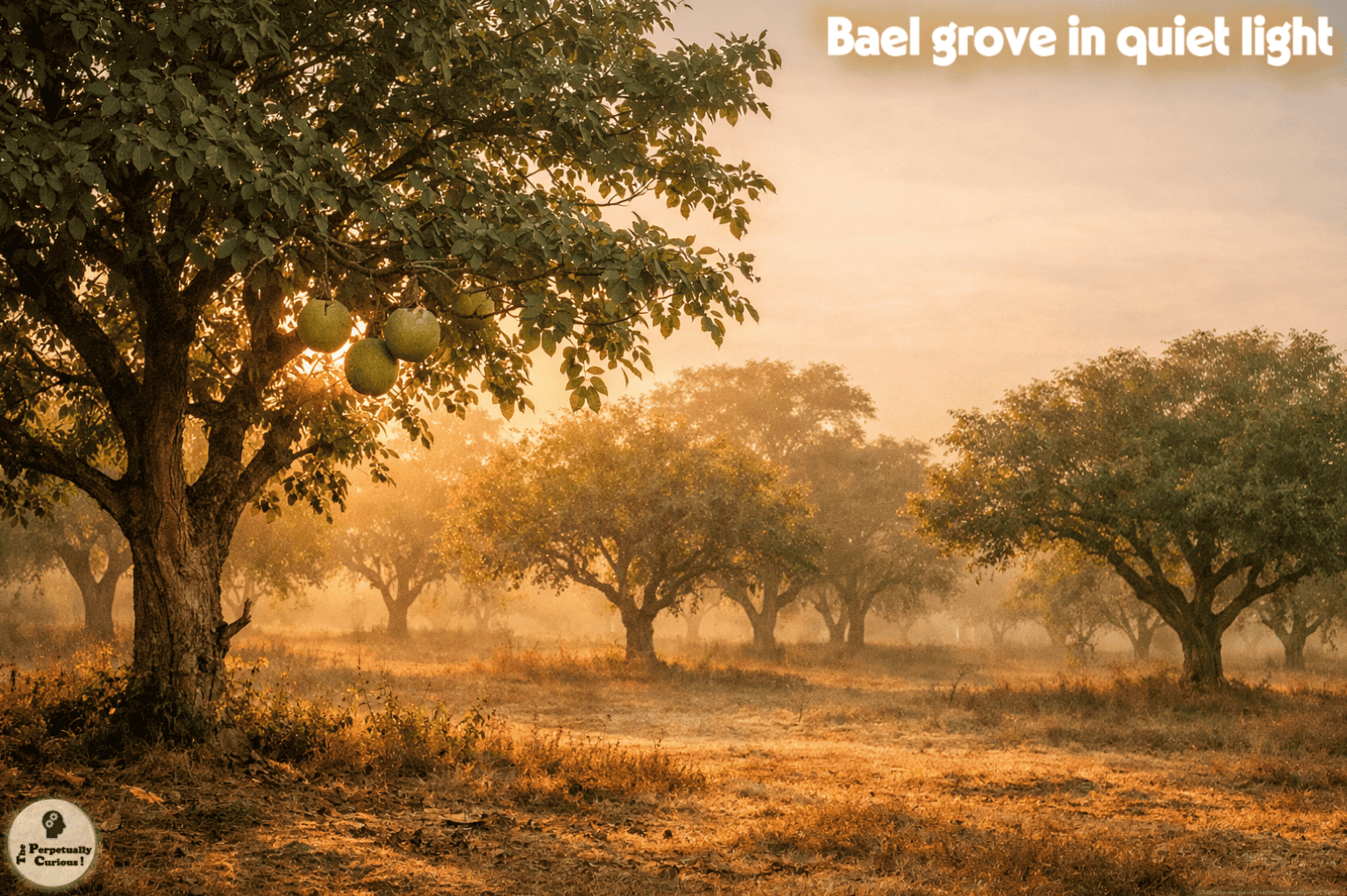
The bael tree, Aegle marmelos, is not a showy tree in the usual sense. Its strength is quieter. It grows across warm South Asian landscapes where dry seasons can be long, soils can be difficult, and survival often depends on patience rather than speed. The first impression may be simple: a modest tree, a cluster of leaves, a hard round fruit. Yet that simplicity hides a deeper pattern. Bael brings together botanical resilience, seasonal usefulness, and cultural memory in a way few trees do.
One of the clearest clues is its form. Bael leaves are typically trifoliate, with three leaflets held together in a shape that has long invited symbolic interpretation. The tree also bears thorns, especially on younger growth, and it is known for tolerating heat, seasonal drought, and a range of soils better than many fruit trees. These traits do not make bael dramatic, but they do make it persistent. In dry forests, rocky ground, and cultivated spaces, persistence is often the beginning of importance.
That importance becomes clearer when the tree is seen through its fruit. Bael fruit has a hard woody rind that must be cracked open to reveal the golden to orange pulp inside. The interior is sticky, aromatic, and seed-filled, with fiber, pectin, vitamin C, and diverse plant compounds that have drawn both culinary and research interest. The full article on The Perpetually Curious continues into the richer botanical, cultural, and visual story behind these features.
A fruit built for patience
The hard shell of bael fruit is more than a visual curiosity. It helps protect the pulp and contributes to the fruit’s reputation for keeping well after harvest under suitable conditions. In many regions, the pulp is prepared as a drink during warm months, where its fragrance and texture become part of seasonal life. This is where the biology of the tree meets everyday human practice. A fruit that ripens slowly, stores relatively well, and carries a distinctive flavor can become more than food. It can become a marker of time, heat, memory, and place.
The same pattern appears in the tree’s religious and ceremonial associations. In Shaivite Hindu practice, bael leaves are closely connected with offerings to Lord Shiva. The three leaflets have been interpreted in multiple ways across traditions, but the larger point is clear: the tree’s physical form helped shape its symbolic life. The cultural meaning did not float apart from the plant. It grew from the leaf, the fruit, the season, and the landscape.
Where ecology becomes heritage
Bael also depends on small ecological relationships. Its pale, fragrant flowers attract insect visitors, with honey bees often reported as important pollinators. Fruit begins with these brief encounters, then develops over many months. That long development cycle means a brief pollination encounter can remain present in the tree long after the flower has faded from view. The result is a tree whose story moves slowly from flower to fruit, from dry ground to household use, and from ordinary growth to inherited meaning. That movement is the heart of the bael tree’s quiet power, and it is why the species carries more than botanical interest.
The central idea is simple: bael matters because resilience became visible in forms people could recognize and remember. Its leaves, thorns, flowers, fruit, and tolerance of difficult landscapes all belong to one connected story. The complete article on the main site carries that story further through the full visual sequence, pollination details, climate-resilience context, Did You Know notes, FAQ, and related botanical links.
🍃 Bael Tree, Quiet Star of Sacred Groves: A Journey Through Aegle marmelos
https://www.theperpetuallycurious.org/articles/bael-tree
https://www.theperpetuallycurious.org/articles/bael-tree
🌿 Continue exploring this theme
More connected articles on plant life, botanical adaptations, plant ecologies, and the living patterns that shape the green world are gathered on The Perpetually Curious! website.
Explore Botanical Wonders Articles
Comments
Post a Comment