


🐾 African Wild Dogs: How Their Pack Life Carries the Hunt
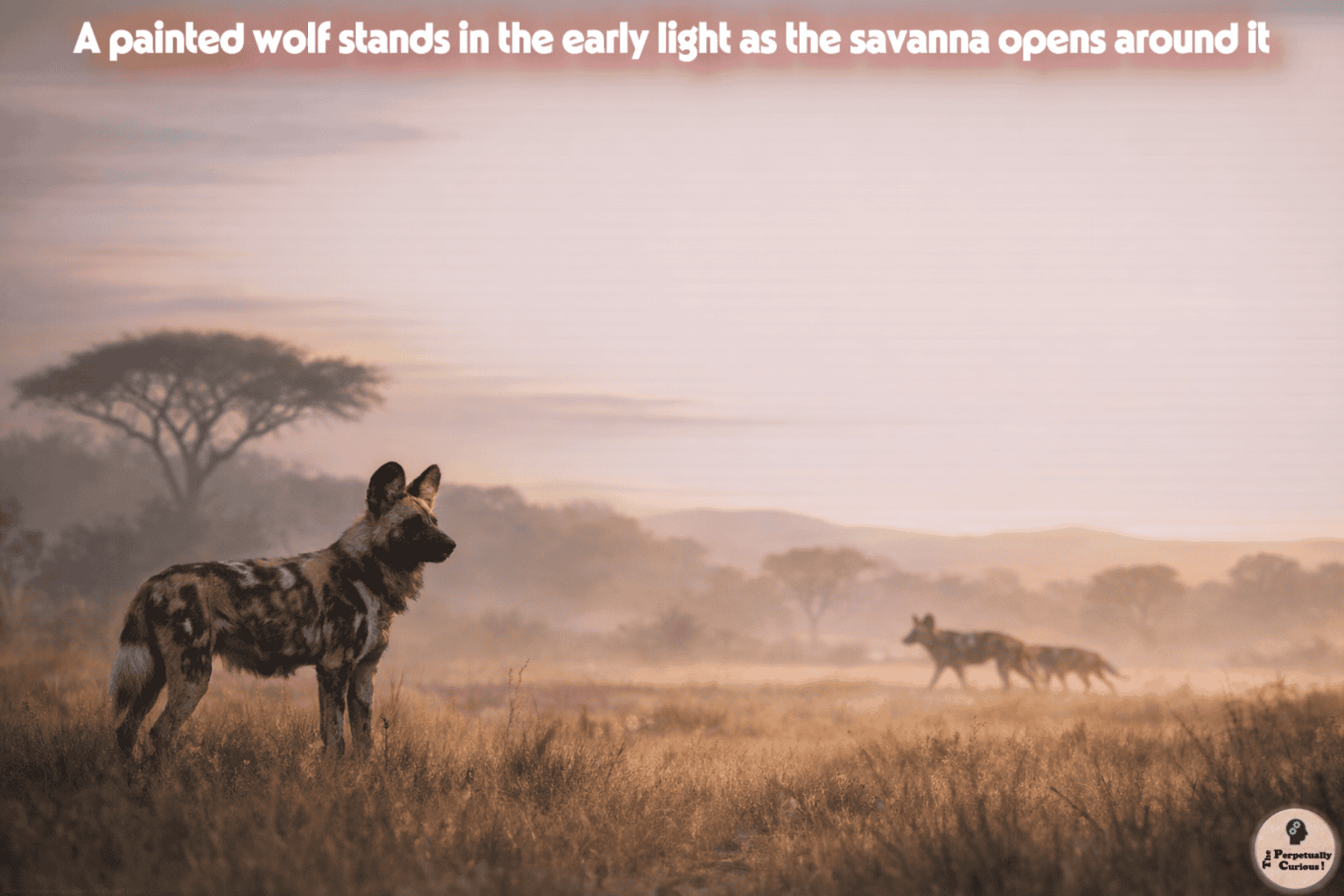
In open savanna, African wild dogs rarely make sense as isolated animals. A single painted wolf is striking, but the deeper pattern appears when several bodies move with the same direction, spacing, and alertness. Pack life is not a decorative detail in their story. It is the working system behind travel, denning, hunting, and survival across a landscape where prey shifts, larger predators compete, and distance is part of daily life.
That is why African wild dogs are often described through movement. They are lean, long-limbed canids with mottled coats, large rounded ears, and a social rhythm that keeps individuals connected across open ground. Their success does not come from one trait alone. It comes from the way endurance, communication, and shared responsibility combine. The full article on the main site carries this idea into denning, vocal signals, conservation pressure, and the wider visual context.
Why the pack is the first clue
A pack gives African wild dogs options that a lone hunter would not have. Adults can move together, change direction quickly, and respond to one another during pursuit. At dens, the same cooperative system turns toward care. Non-breeding adults may help guard pups and return food, while the breeding pair usually produces most of the young in a season. This does not make the group sentimental. It makes the group functional.
Communication helps hold that system together. Contact calls, posture, tail signals, and other social cues allow pack members to stay aligned without turning every movement into disorder. The details vary with the moment, but the larger pattern is consistent: an individual action becomes more effective when it is folded into a group response.
The pack also helps solve a spatial problem. African wild dogs often range widely because their prey is mobile and their landscapes are uneven. Open country, woodland edges, dry-season water sources, and areas used by lions or hyenas all influence movement. Coordination allows the group to cover ground while remaining socially connected. In that sense, pack dynamics are not separate from savanna ecology. They are one of the ways the animal meets the landscape.
For a wider landscape lens, the related essay on African wildlife and landscapes places these pack movements within the broader rhythms of habitat, season, and coexistence.
How movement becomes a strategy
Hunting is the clearest place where this social pattern becomes visible. African wild dogs are often called endurance hunters, but the careful version of that idea is more nuanced. They may pursue prey over distance, and they may also use shorter bursts, turns, and repeated pressure depending on terrain and prey. Some studies report hunting success above 60 percent, while other estimates vary by habitat, pack condition, and study design.
Their prey is usually medium-sized ungulates such as impalas, gazelles, and young wildebeest, though local availability matters. Once a kill is made, feeding often begins quickly, partly because larger predators and scavengers can appear. Speed helps, but speed alone is not the story. The more revealing pattern is coordinated motion: several animals reading the same ground, adjusting to the same prey, and avoiding the same risks.
This lens also explains why conservation is so closely tied to space. A species built around travel and pack connection becomes vulnerable when habitat is broken into smaller fragments. Roads, snares, disease, and conflict with human activity can affect local groups sharply. The complete version follows the broader chain of pack behavior, pup care, predator competition, images, FAQ, and conservation context, while this lens stays with one central idea: African wild dogs survive through relationship in motion.
🌍 African Wild Dogs: Painted Wolves Of The African Savanna
https://www.theperpetuallycurious.org/articles/african-wild-dogs/
https://www.theperpetuallycurious.org/articles/african-wild-dogs/
🐾 Continue exploring this theme
More connected articles on wildlife, homestead companions, animal behavior, and the quiet ecologies shaping life around us are gathered on The Perpetually Curious! website.
Explore Wilderness & Homestead Creatures Articles
Comments
Post a Comment