


✋ Palm Lines Explained: The Quiet Folds That Help the Hand Move
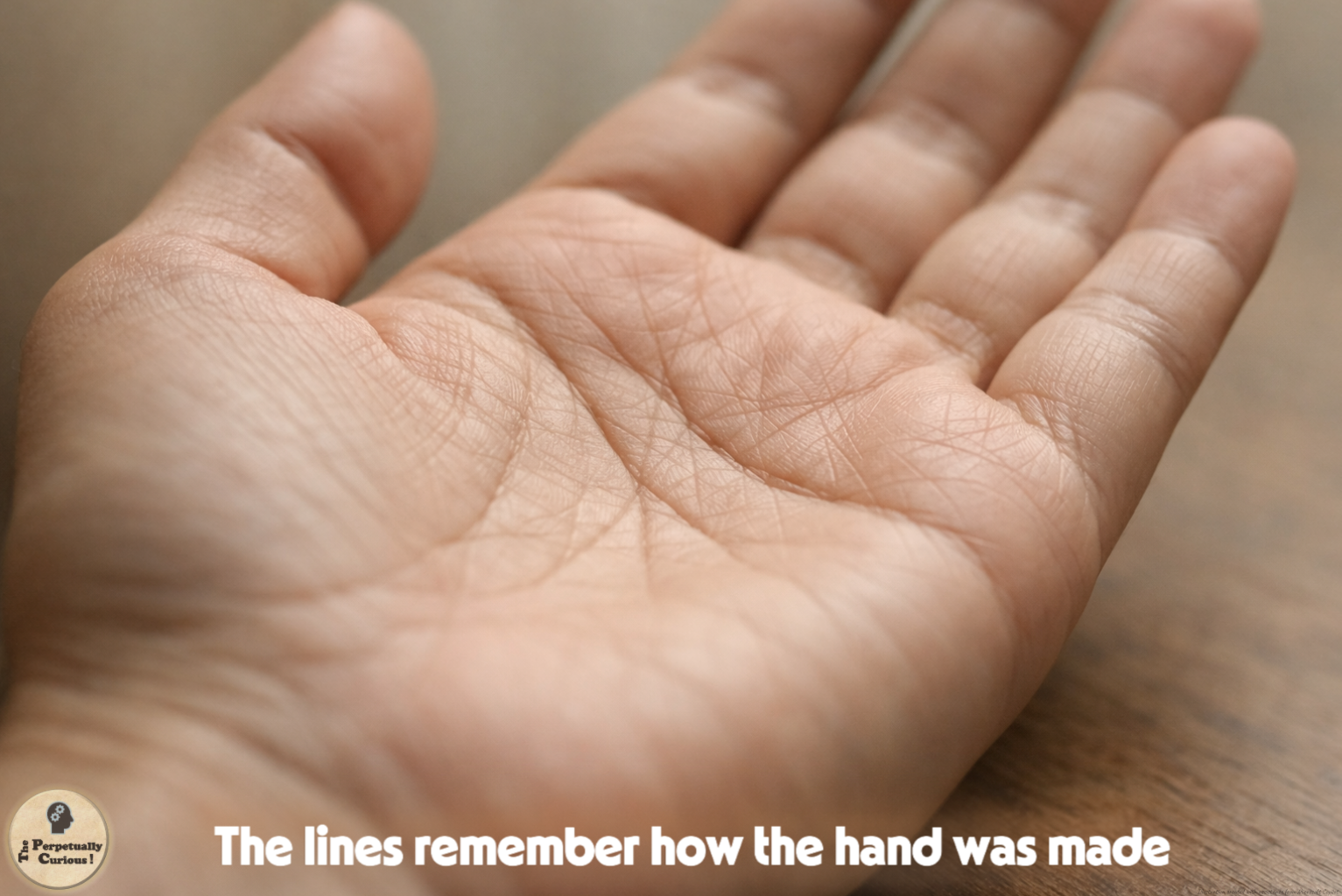
Palm lines are better understood as palmar flexion creases. Their main role is practical. The skin of the palm is thick, stable, and firmly attached to deeper tissues, which helps the hand grip, press, carry, and support weight. That stability has a tradeoff. Thick anchored skin cannot stretch freely each time the fingers bend. Flexion creases provide controlled folding zones, allowing the palm to move without pulling the skin in every direction.
Why palm lines begin before the hand is used
The earliest story of these creases begins during fetal development. Around the late embryonic and early fetal weeks, the hand is not a finished surface. Temporary raised regions called volar pads are present on the developing palm and fingers. As the hand grows, the skin, connective tissue, developing bones, fascia, and tendons interact in ways that guide where the skin folds. The result is a set of major creases that are usually already present at birth.This is why palm lines do not record how often someone has held a pencil, lifted a suitcase, or worked with tools. Later life can change the surface texture of the hand. It can add calluses, dryness, fine wrinkles, or small scars. But the main architecture of the palm is mainly a developmental feature, not a diary of daily habits. The full article on The Perpetually Curious traces this origin more carefully, including how volar pads, flexion creases, and hand anatomy connect.
Variation belongs to the same developmental story. Most people have two main transverse creases across the palm, along with a curved thenar crease around the base of the thumb. Some people have deeper lines, fainter lines, interrupted creases, or a single transverse palmar crease. These differences can reflect genetics, developmental variation, and population-level patterns. In medicine, certain crease patterns may be noted as one feature among many, but a palm line by itself is not a diagnosis.
Where biology and meaning separate
Human cultures have also read meaning into the palm. Palmistry traditions have named some creases as the heart line, head line, or life line, and have interpreted them through symbolic systems. A careful scientific view does not need to dismiss the cultural history, but it must separate symbolism from evidence. Palm lines can reveal how the hand formed and how it moves. They do not reliably predict character, lifespan, or future events.That contrast makes the palm a useful place to think about the relationship between structure and story. The lines are biological folds, shaped by early growth and refined by function. At the same time, they have become a canvas for human imagination. The science begins with development and movement. The meanings people attach to those lines belong to culture, memory, and interpretation.
Continue the article on the main website
The complete version continues on the main site with the fuller developmental sequence, functional anatomy diagram, cultural framing, and reader-focused explanations.Read the complete version
🧬 Continue exploring this theme
More connected articles on living systems, human health, cellular processes, and the biological patterns shaping life are gathered on The Perpetually Curious! website.
Explore Biology & Health Articles
Comments
Post a Comment