Vertical Worlds: Ancient Indian Models of Cosmic Architecture 🌍
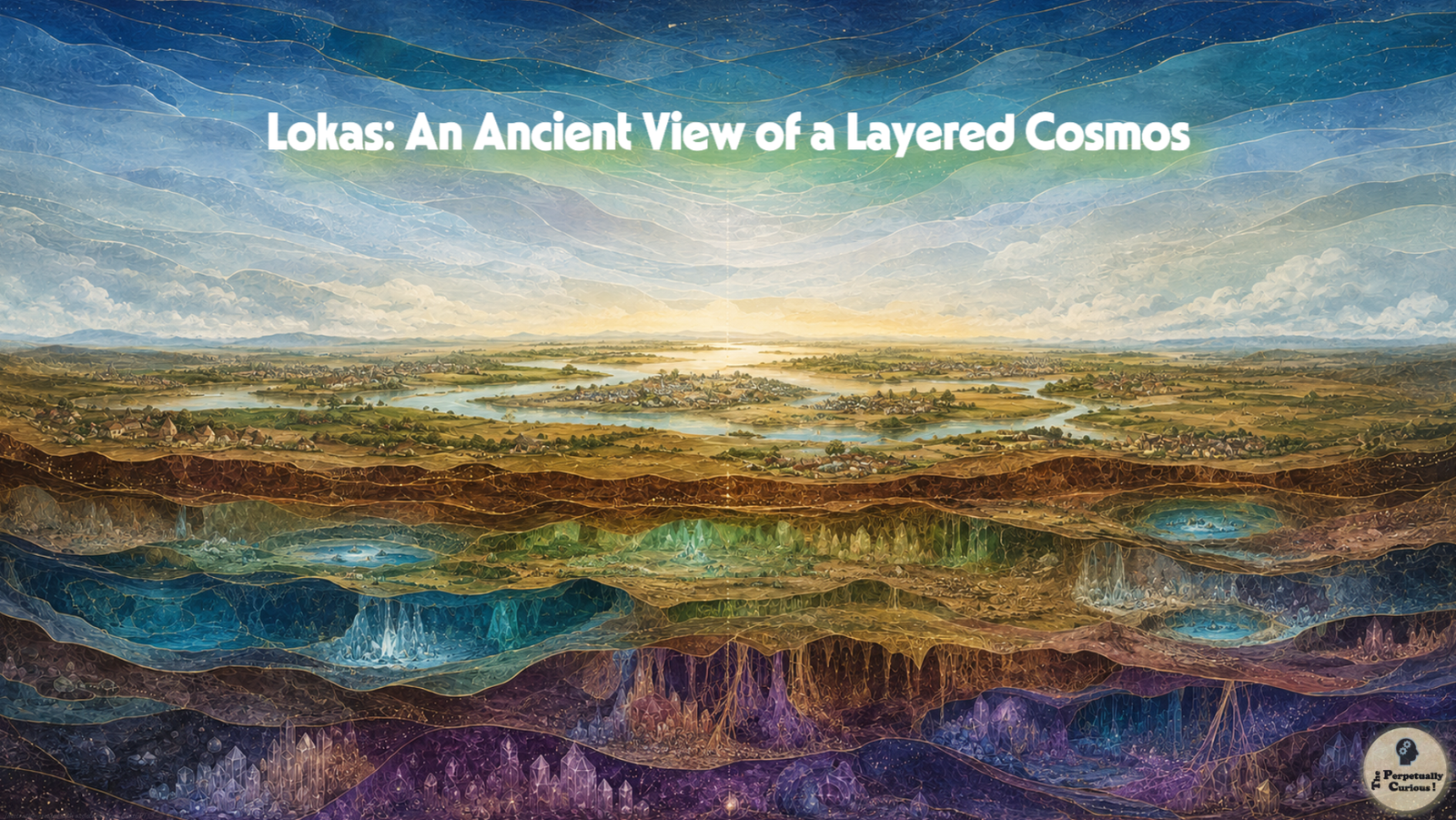
A vertical universe can look like a moral ladder: higher worlds above, lower worlds below. That image is memorable, but it can also flatten a much more complicated cosmography. In several Puranic traditions, existence is arranged through a familiar fourteen-loka scheme, with seven regions above or beginning with the human world and seven nether regions beneath it. Yet position in the cosmic map is not always the same thing as moral value.
That distinction matters because modern readers can easily import a simple heaven-versus-hell model into a tradition that does not fit it neatly. The vertical order was spatial, symbolic, ethical, and philosophical at once, and different texts did not always arrange or interpret its regions in exactly the same way.
A Map With More Than One Axis
Earlier Vedic language often works with a threefold cosmos of earth, intermediate space, and heaven. Later Puranic literature develops far more elaborate sacred geographies, including heavenly spheres, mountains, continents, oceans, and subterranean regions. One influential arrangement remembers this complexity through fourteen lokas.
Even the familiar fourteen-world scheme is not a single frozen chart. Lists of the lower regions can vary among texts, and later traditions may emphasize different relationships among place, conduct, merit, rebirth, and liberation. Treating the map as a family of related cosmographies is therefore more accurate than imagining one standardized diagram accepted everywhere and at every period.
The upper worlds are commonly associated with increasingly refined forms of existence, but the lower regions complicate the idea that height alone measures goodness. A realm can be situated beneath the human world without being presented as a chamber of punishment. In other words, the map asks at least two different questions: Where is a realm placed, and what kind of existence does it represent?
Pātāla Is Not Simply Hell
The seven lower regions are often grouped under Pātāla. Puranic descriptions can portray these places as splendid, jeweled, richly inhabited worlds associated with nāgas, daityas, dānavas, and other powerful beings. Sutala, for example, is linked with the ruler Bali and is treated with dignity rather than as a place of torment.
Naraka belongs to a different, though related, vocabulary. Many texts use Naraka for punitive or corrective destinations associated with harmful conduct. Pātāla, by contrast, refers to subterranean regions within sacred cosmography. The two categories can exist within the same larger universe without being identical.
The fuller treatment on our main site keeps this distinction inside the wider textual landscape, including variant loka lists, karma, post-mortem paths, and the difference between spatial and symbolic readings.
Why the Distinction Changes the Whole Map
Once Pātāla and Naraka are separated, the fourteen-loka framework becomes less like a moral staircase and more like a layered architecture of place and experience. Some heavenly states can be pleasurable yet temporary. Some lower regions can be opulent without representing liberation. Karma may shape future experience, but the texts do not offer one universal admission chart assigning every action to one named realm.
The same caution applies when cosmography meets visible landscape. Mount Kailash as a sacred landscape can carry cosmic-center associations in some traditions without becoming automatically identical with the mythic Mount Meru. Sacred geography works through meaning as well as location.
This is why the vertical cosmos remains intellectually interesting. It turns height, depth, light, duration, return, and moral consequence into a language for thinking about existence, while resisting the tidy simplification that every higher place is good and every lower place is bad. The map is memorable because it is ordered. It is revealing because that order is more nuanced than a ladder.
Note: This article offers a historical and cultural exploration of ideas about a layered cosmos for general informational purposes.
Comments
Post a Comment