


🧠 Consciousness in the Brain: Where Awareness Takes Shape
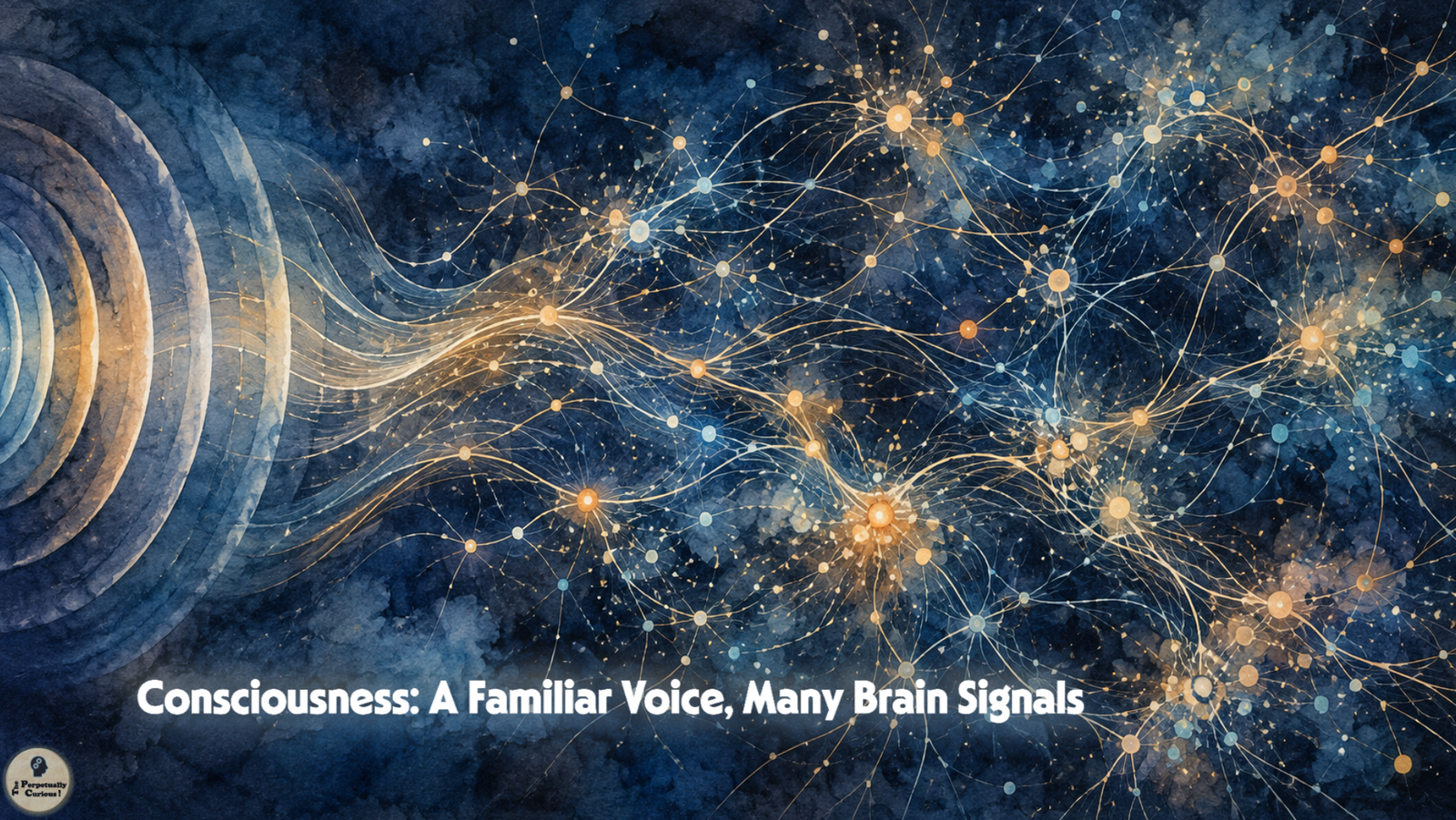
A voice calls your name, and the sound is not just sound. It carries memory, attention, recognition, and the quiet certainty that the moment belongs to you. Somewhere inside the brain, electrical and chemical events become part of lived experience. Yet that somewhere is not easy to locate.
One tempting place to begin is the synapse, the tiny junction where one nerve cell influences another. A signal reaches the end of a neuron, chemical messengers cross a narrow cleft, and receptors on the next cell change how likely that cell is to respond. The gap is astonishingly small, but the question it opens is immense.
⚡ A tiny gap with a larger question
Synapses help the brain communicate, adapt, and remember. Their proteins help organize and stabilize contact between cells, and their strength can change with activity. That plasticity is one reason experience can leave lasting traces in neural circuits.
Still, a synapse is not a miniature chamber of consciousness. No individual junction has been shown to contain awareness. A synapse helps signals move and change; it does not, by itself, explain why a sound is heard as a voice, why a color is seen as red, or why a moment feels like it is happening to someone.
That is where the scale begins to widen. Consciousness may depend less on one hidden location and more on patterns of communication among many regions, circuits, and states. The tiny gap matters because it is one place where the brain becomes changeable, but the felt moment belongs to a much larger pattern.
🧩 From one junction to a wider pattern
When you recognize a familiar voice, auditory processing is only part of the event. Memory, attention, emotional relevance, and bodily state all help shape the encounter. The brain is not simply receiving a sound. It is placing that sound inside a living context.
To follow that wider ensemble of neurons, glial cells, and wider brain networks, a related main-site article looks at how many cell types and signals shape human experience. Here, the important point is narrower: awareness seems to arise from organized activity, not from one isolated part.
This is why sleep, anesthesia, and brain injury remain so important to the study of consciousness. They show that wakefulness, responsiveness, and experience can come apart in complicated ways. The same brain can pass through states in which the outside world fades, dreams appear, or communication among regions changes. These shifts suggest that consciousness depends on active coordination, not fixed anatomy alone.
🔎 The search moves from place to pattern
Researchers study the cortex, thalamus, brainstem, claustrum, and the connections among them, but no single structure has been established as the whole seat of consciousness. Some regions help regulate arousal. Others contribute to perception, attention, or the contents of experience. Their importance depends on the state of the brain and the pattern of interaction among them.
The larger main-site version follows that wider landscape through changing brain states, proposed neural correlates, competing theories of awareness, and the hard question of why physical activity is felt from within.
Perhaps the better image is not a control room hidden in the brain, but a conversation taking shape across many participants. Synapses help carry the exchanges. Networks give them form. Changing states reveal how fragile and flexible the whole arrangement can be.
Between the tiny gap and the whole mind lies the enduring mystery. The brain communicates, adapts, and organizes itself, yet the leap from signal to experience remains open. That openness is not a weakness of the question. It is the reason the question continues to captivate neuroscience.
Comments
Post a Comment